What is Python?
Brief History of Python
Python, general-purpose high-level computer programming language valued for its English-like syntax and powerful built-in data analysis and data science functions and libraries.
Dutch programmer Guido van Rossum developed Python in 1991 after expressing frustration with the limitations of the programming language ABC. Python, which he named after the British television series Monty Python’s Flying Circus, was publicly released in 1994. Although Van Rossum remained deeply involved in Python’s development until 2018, a robust community of other developers also made significant contributions.
Python’s open-source, non-proprietary nature played a pivotal role in its swift development and rising popularity. A vast community of volunteer programmers collaboratively developed thousands of modules, greatly expanding Python’s capabilities. Python has seen three primary evolutions: Python 1.0, released in 1994; Python 2.0, in 2000; and Python 3.0, in 2008. Notably, Python 3.0 is not backward-compatible with earlier versions. By the early 2020s Python had become one of the most extensively used programming languages worldwide.
Advantages of Python
Ease of use - One of the main reasons why Python is considered easy to learn is its simple syntax. Python code is easy to read and understand, which makes it easier for beginners to write and debug code. Another reason why this language is beginner-friendly is its versatility.
Readability - Python code is easy to read and understand. In addition, you need to write fewer lines of source code to develop applications than in other languages
Large Community - It's more productive. Compared to some other more complex programming languages like C++, Python's syntax allows users to do more with less and cut down on time and effort to write the same lines of code. It has an expansive, supportive community of users.
Application in Various Fields - Python is a computer programming language often used to build websites and software, automate tasks, and conduct data analysis. Python is a general-purpose language, meaning it can be used to create a variety of different programs and isn't specialized for any specific problems
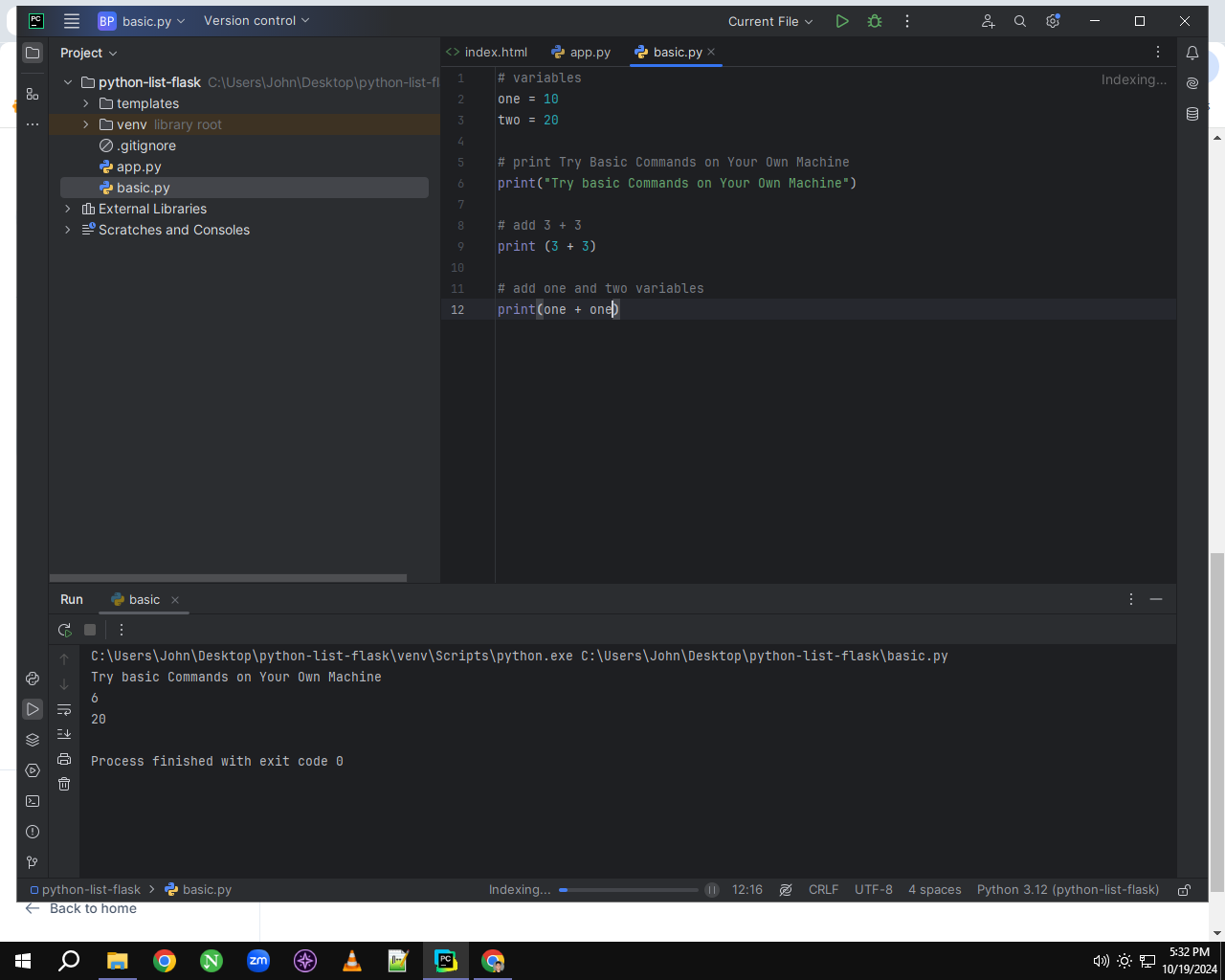
Try Basic Commands on Your Own Machine
Control Structures
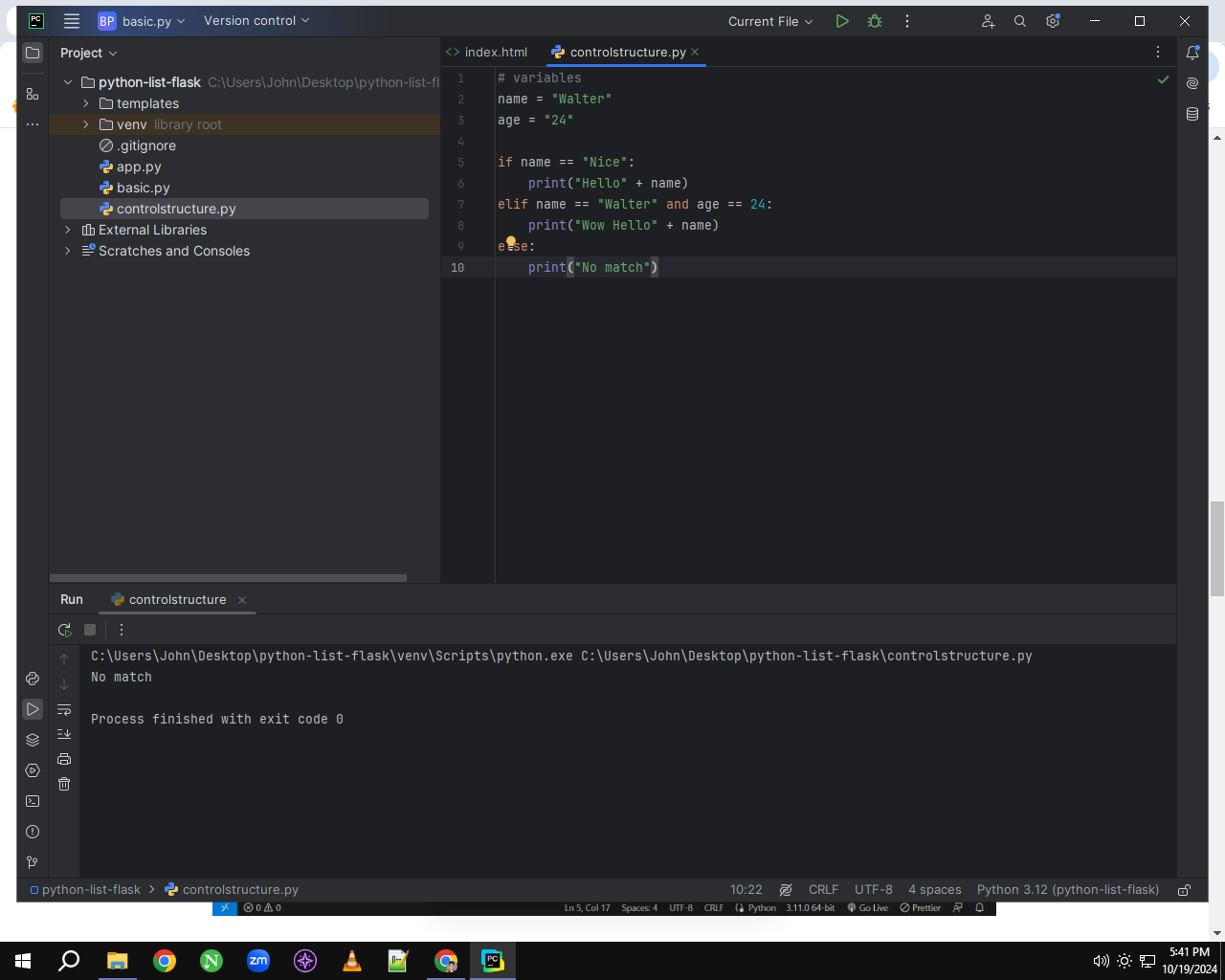
Control flow refers to the sequence a program will follow during its execution. Control structure in python if statement, if-else conditional statement, if-elif-else conditional statement and Nested if statements.
Loop Structures
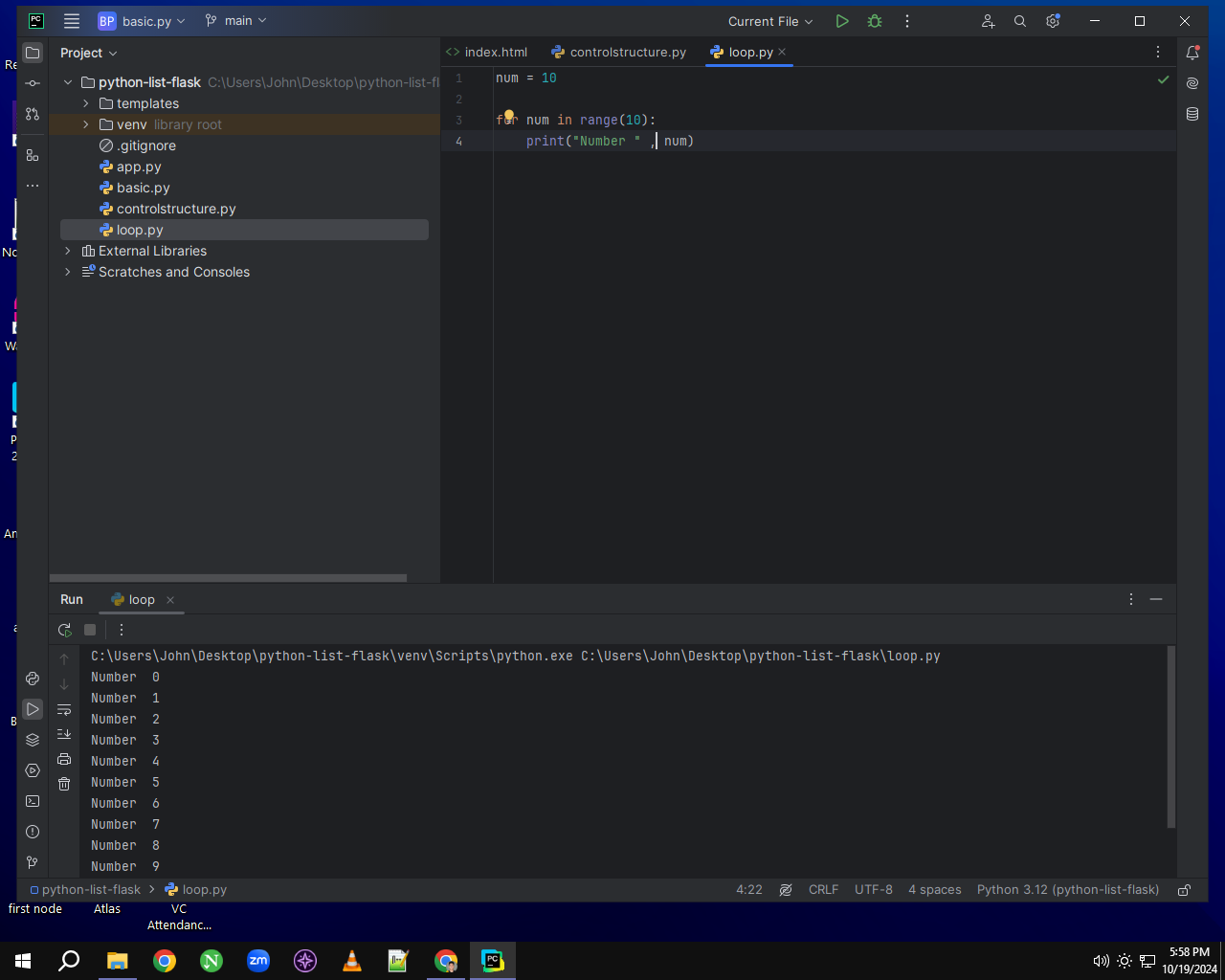
Python programming language provides two types of Python loopchecking time For loop and While loop.